After a very successful First Friday, celebrating Dunbar High School, this month’s blog takes a look at another school established for African-Americans in Lynchburg in the early 20th Century.
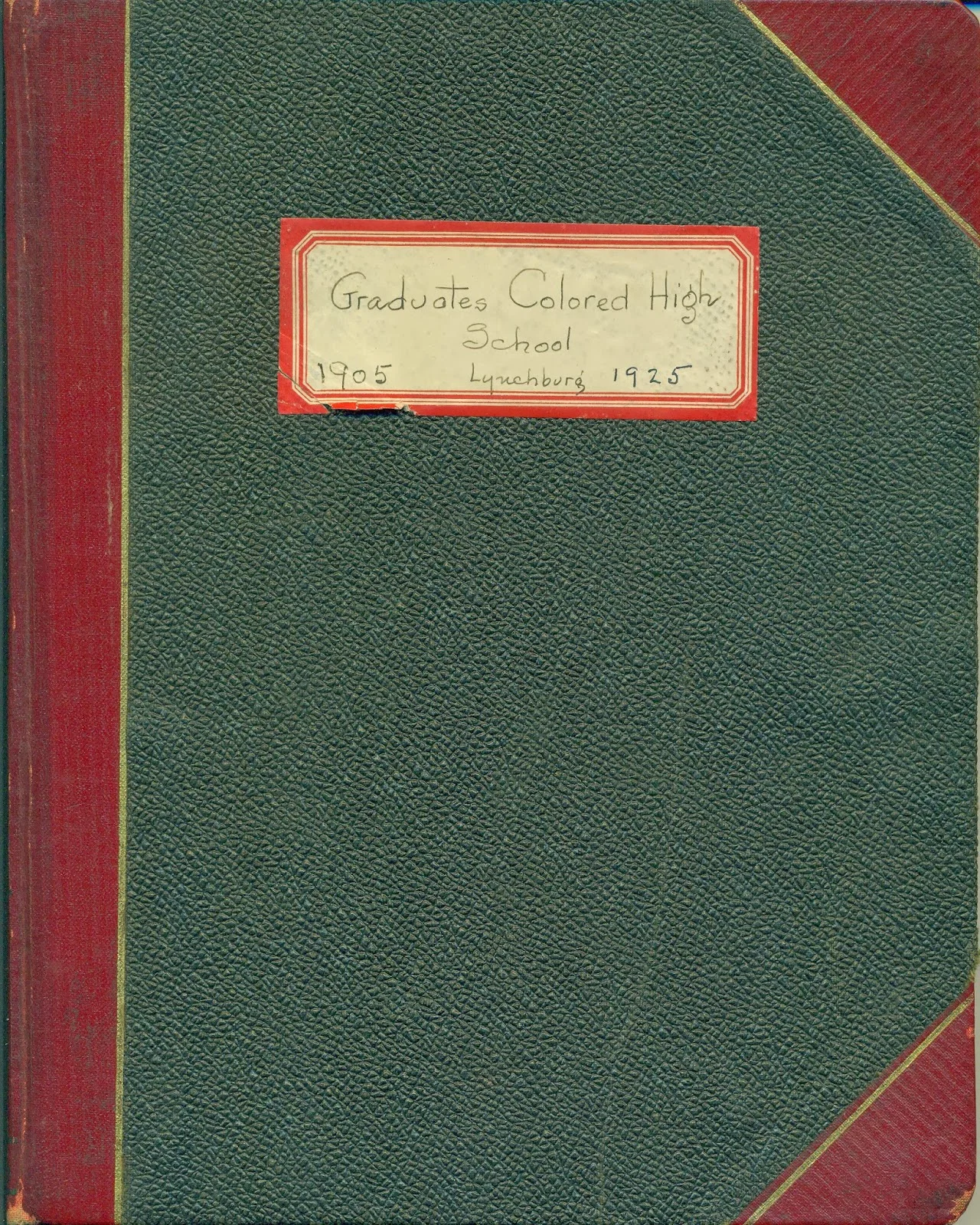
Roster of graduates from the Jackson Street School, 1905-1925
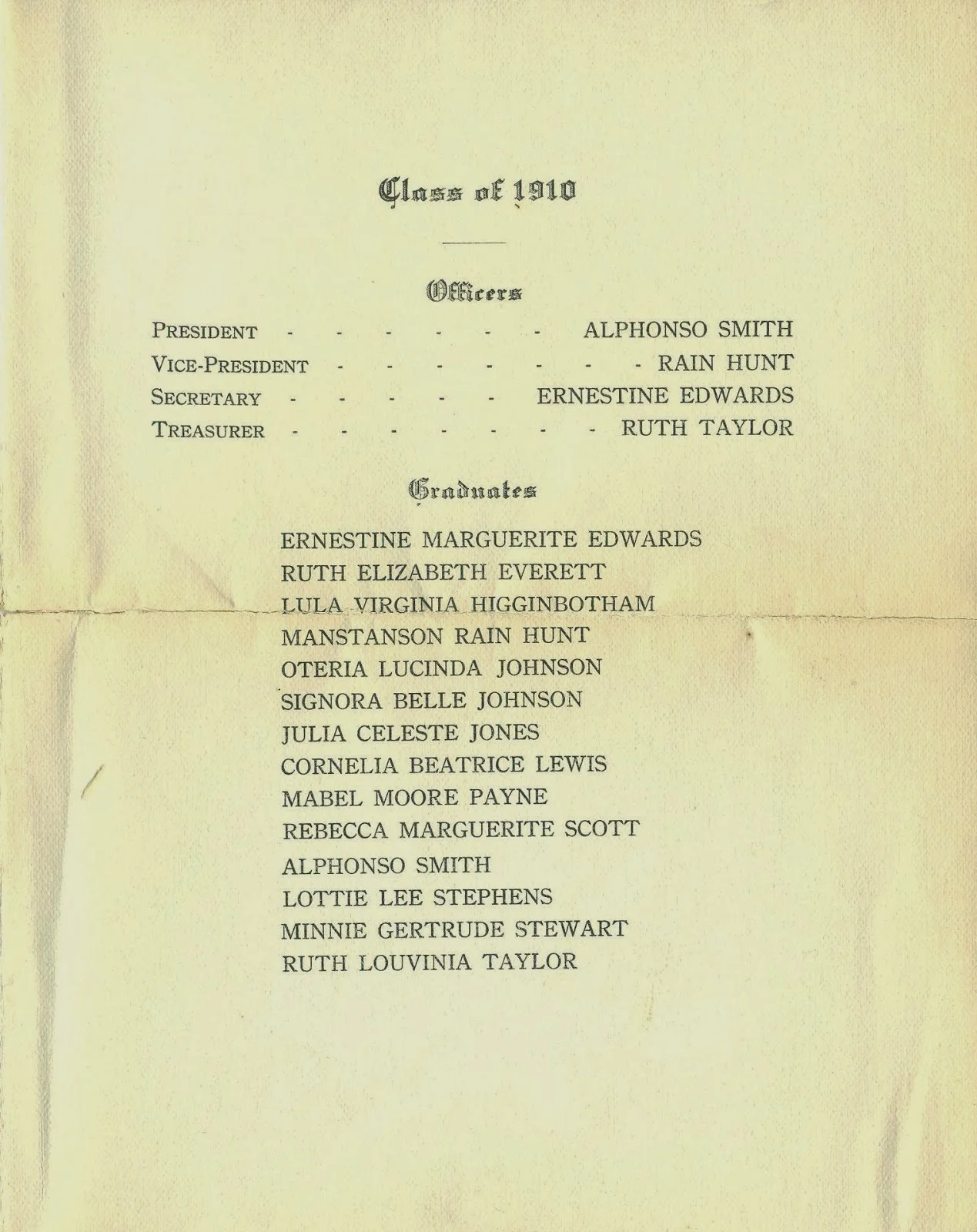
In 1991, the Lynchburg Museum received a donation from Lynchburg City Schools consisting of turn of the twentieth century documents and photographs. Chosen from that collection, is a ledger book entitled Graduates Colored High School, Lynchburg 1905-1925. Listed, in perfect script, are the names of students in each year’s graduating class, class mottoes, and later job occupations, marriages, and/or deaths. The Museum does not know who kept the ledger book but it was for the graduates of the Jackson Street School, then named Lynchburg Colored High School. According to the records, from 1905-1925 there were 339 graduates of the Jackson Street school. The graduates spread out along the east coast; Philadelphia, New York, and North Carolina, and attended colleges such as Howard University and Virginia Seminary. Many became teachers or were married. Other examples listed beside the names are: railroad clerk, knitting or hosiery mill worker, piano or music teacher, physician, seamstress, stenographer, or employed by the government in Washington D.C.

The graduating class of 1925 and post-graduation information including employment and life events.
According to Lynchburg and its People by William Asbury Christian, the first free public schools in Lynchburg opened their doors on April 5, 1871.[1] Some residents did not want to pay taxes for public schools but “this was the beginning of one of the best systems of public schools in the state.”[2]
The Jackson Street School originally operated inside Jackson Street Methodist Church at 901 Jackson St. In 1911, the Yoder School was built on Jackson between First and Second Streets, giving black children an actual school building. This school served the Tinbridge Hill community. Though the black schools in Lynchburg mostly received used textbooks and “a lot of the finances were lacking…the black teachers were more caring about the black [kids],” said Marvin Stevens in Remembering Tinbridge Hill

Jackson Street School
In 1923, Dunbar High School opened for black high school students which made the Yoder School an elementary school. After years of neglect and a declining neighborhood population, the Yoder School was demolished in 1970.[3] As the Lynchburg schools were desegregated, Dunbar High closed in 1970 and those students began attending E. C. Glass High School. It reopened as the Dunbar Middle school we know today.

Commencement Program, Class of 1910