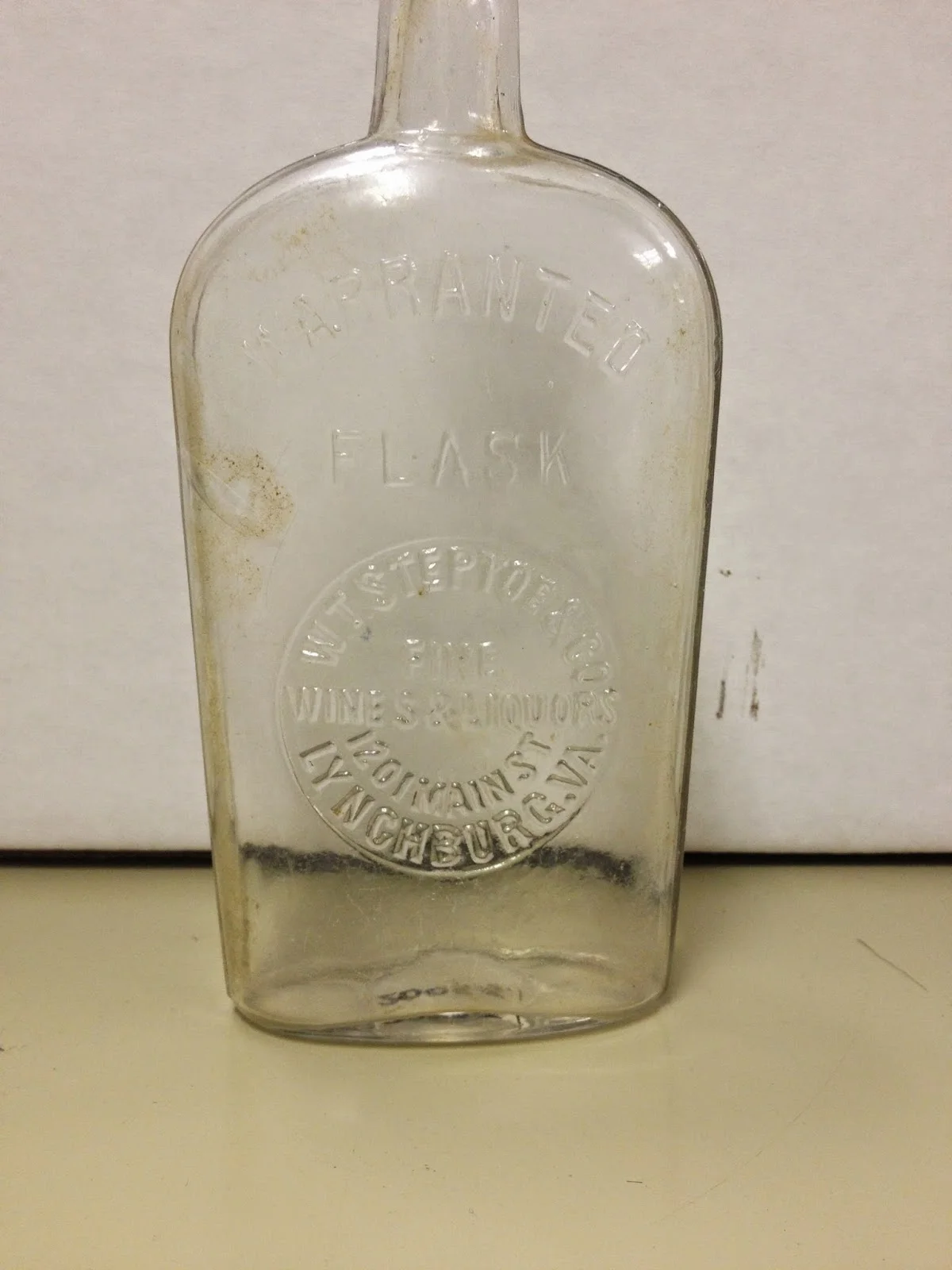
Midst the many interesting artifacts the Museum System has stored away, pining for exposure is a myriad of liquor bottles from pre-Prohibition Lynchburg.
Lynchburg had a tumultuous relationship with Temperance Movements and Prohibition. In the wake of the Civil War, Virginia allowed its independent municipalities to enact local dry laws. As was the case with much of the American population, the citizens of Lynchburg were very much split on the issue of Prohibition causing the issue to be on the forefront of ballots for 25 years. Votes on whether or not to allow the sale of alcohol in Lynchburg were balloted in 1886, 1890, and 1898. These first three votes all fell to the wets who wanted to retain their right to buy and consume alcohol. In 1909, however, Lynchburg’s drys managed to pass referendum prohibiting the sale of liquor within the Lynchburg city limits. This referendum was overturned two years later; but in 1916 with the passage of the Mapp Act the entire state of Virginia went dry. The Federal government made Prohibition national edict in 1920 following the ratification of the 18th Amendment.

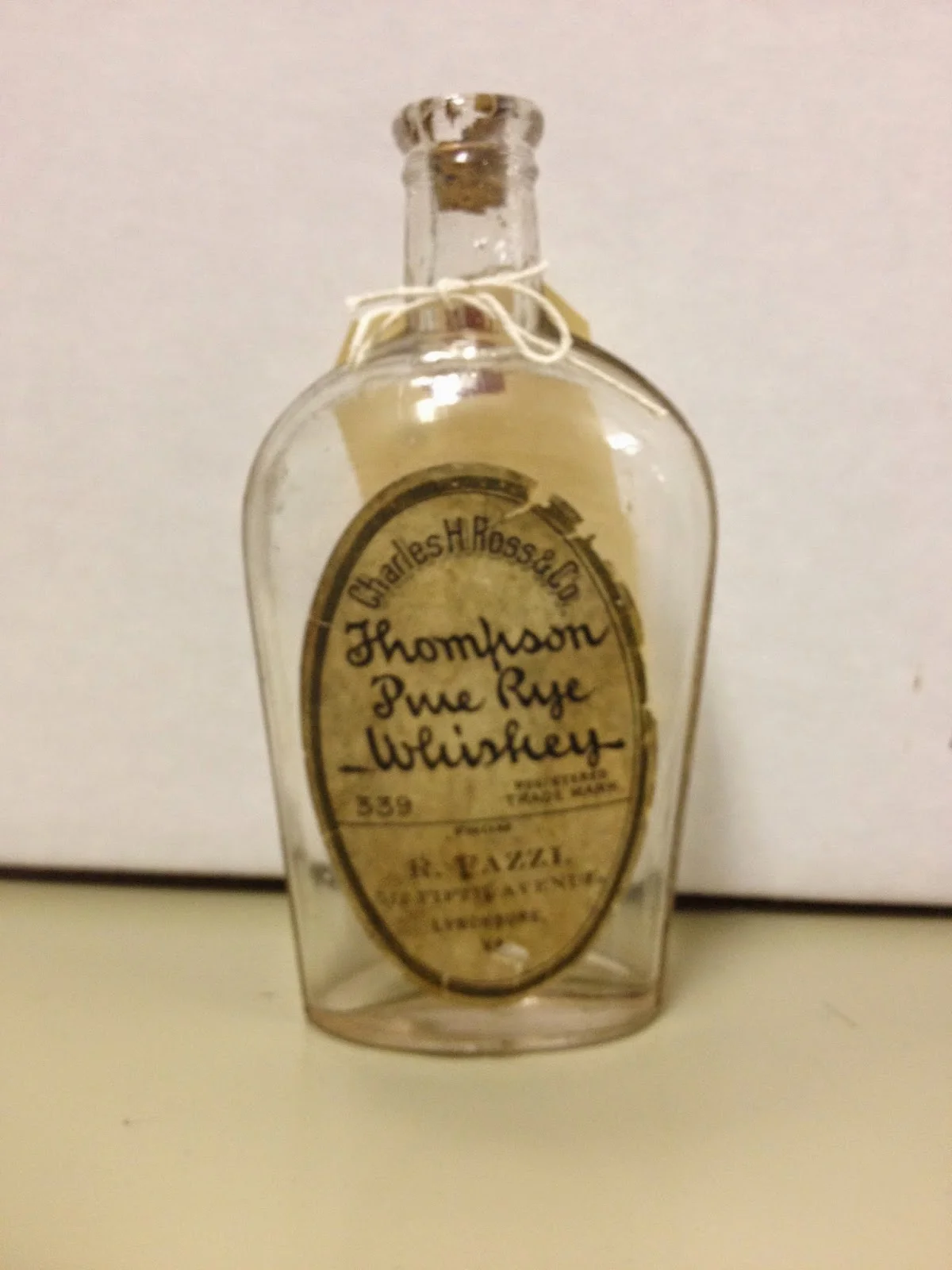
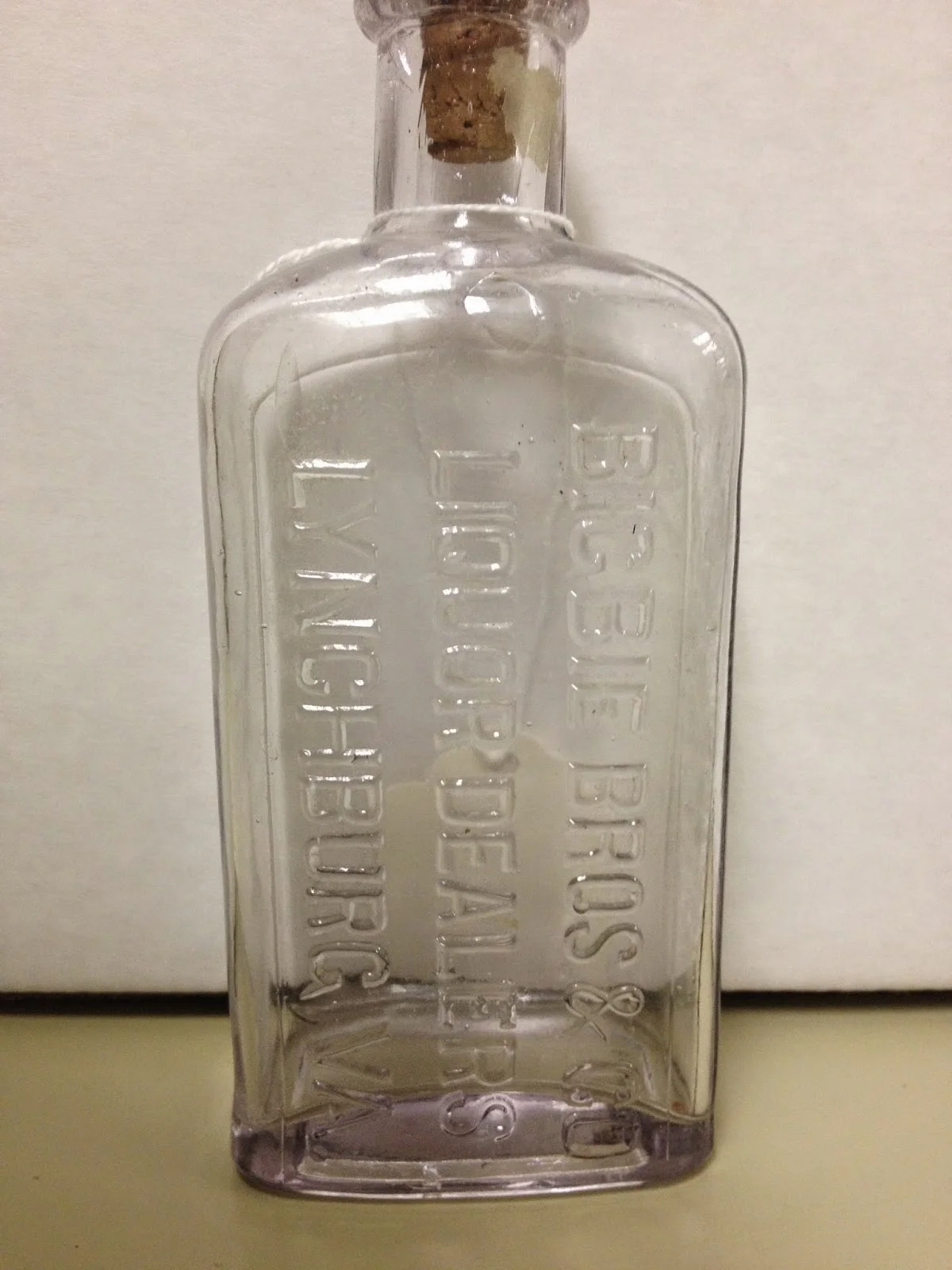
Among the various purveyors of “ardent” liquors in Lynchburg two of the more prominent were Bigbie Bros. & Co. and R. Fazzi.
The Museum’s collection includes numerous bottles from each of these stores and they appear under regionally inspired house brand names such as Piedmont Club and Natural Bridge. Other prominent liquor sellers in Lynchburg included L Lazarus & Son, Jos. Lawson & Co., Morrison Bros, Charles H. Ross & Co. and CC Trent. Many of these stores remained open in Lynchburg during the brief local Prohibition between 1909 and 1911, but had to shut down after the Mapp Act. The formerly prosperous owners of these popular liquor stores looked to new investments.
William Bigbie of Bigbie Bros. & Co. invested in the G.A. Coleman Company, a successful Lynchburg shoe manufacturer, after briefly partaking in the liquor business in Maryland before nationwide Prohibition took effect and he returned to Lynchburg.
During Prohibition, rural Virginia became one of the more infamous regions in the country as it was one of the production hubs for backwoods distilleries and moonshine. Cities such as Danville, Roanoke, and Lynchburg became hubs of moonshine consumption.
After the ratification of the 21st Amendment in December of 1933, Prohibition came to an end. From 1916-1933 the state of Virginia had its own Department of Prohibition. From 1916 until 1920, the main purpose of that department was to prevent liquor produced in a “wet” locale from being smuggled into Virginia. After national Prohibition was enacted the Virginia Dept. of Prohibition began tackling moonshiners and speakeasies, a losing battle.
With the repeal of Prohibition, Virginia’s Dept. of Prohibition was the only organization with any authority in regards to the sale and manufacture of alcohol in the state and, in an ironic turn, was put in charge of regulating the sale, transportation, and production of alcohol in the state until it could be replaced by the still-active Virginia Department of Alcoholic Beverage Control in 1934.